
4 model sizes:
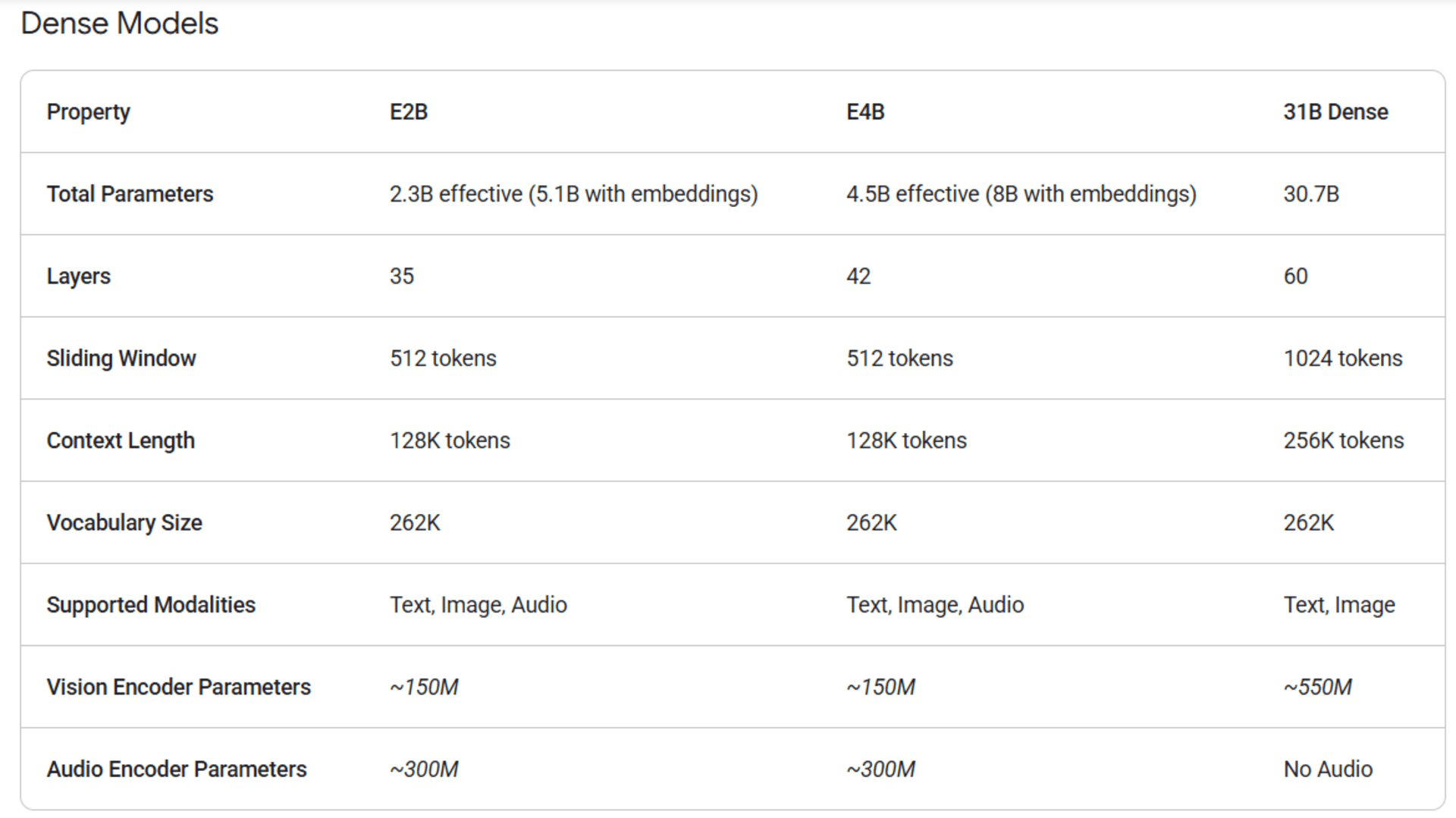
E2B / E4B - Edge models, run on-device (a Raspberry Pi or your phone, <1.5GB RAM)
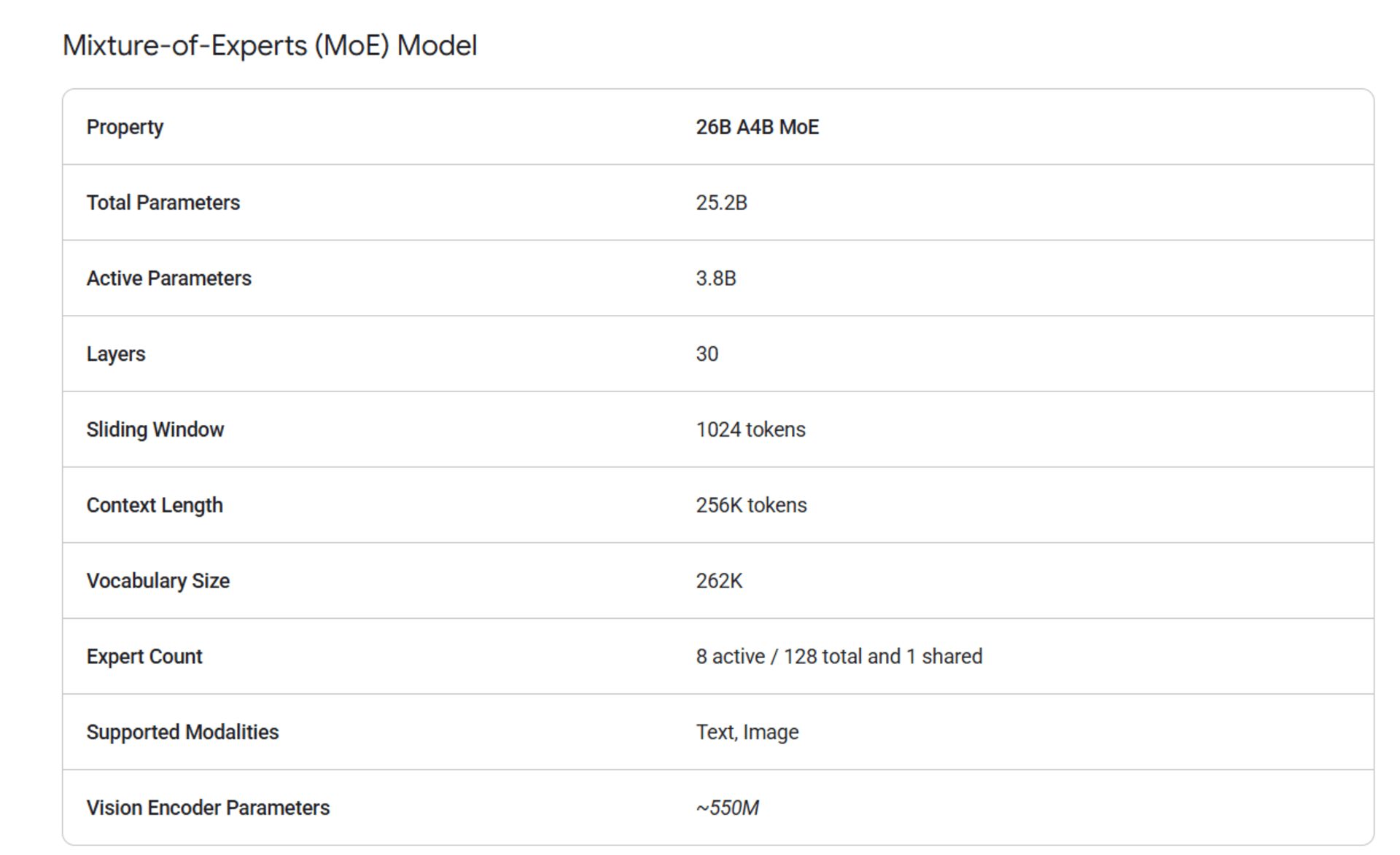
26B A4B MoE - only 3.8B params active at inference
31B Dense
Specs from the model card[1]
Gemma 4 benchmarks (31B unless noted)
Reasoning
• MMLU Pro (massive multitask language understanding): 85.2%
• GPQA Diamond (graduate-level science Q&A): 84.3%
• AIME 2026 (American math olympiad): 89.2%
• MMMLU (multilingual MMLU, 140+ languages): 88.4%
Coding
• LiveCodeBench v6 (real-world coding problems): 80.0%
• Codeforces ELO (competitive programming rating): 2150
Vision
• MMMU Pro (college-level multimodal reasoning): 76.9%
• MATH-Vision (math problems with visual context): 85.6%
Audio (E2B /E4B only)
• FLEURS WER: 0.08
• CoVoST (speech-to-text translation): 35.54
When to use which
Scenario | Best choice |
|---|---|
Cloud, quality is the priority | 31B Dense |
Cloud, you're serving millions of requests and cost matters | 26B MoE (only 3.8B params active at inference — cheaper per token) |
On-device / mobile / edge | E2B or E4B |
Audio transcription | E2B or E4B (only these two support audio) |
All these models are released under the Apache 2.0 license.