[A Manifesto for the Independent, the Curious, and the Untamable]
The phrase “cat lady” is meant to sting. It conjures images of loneliness, eccentricity, even failure. But if you understand cats—and the women who love them—you see something entirely different: autonomy, self-respect, and the quiet power of refusing to be tamed.
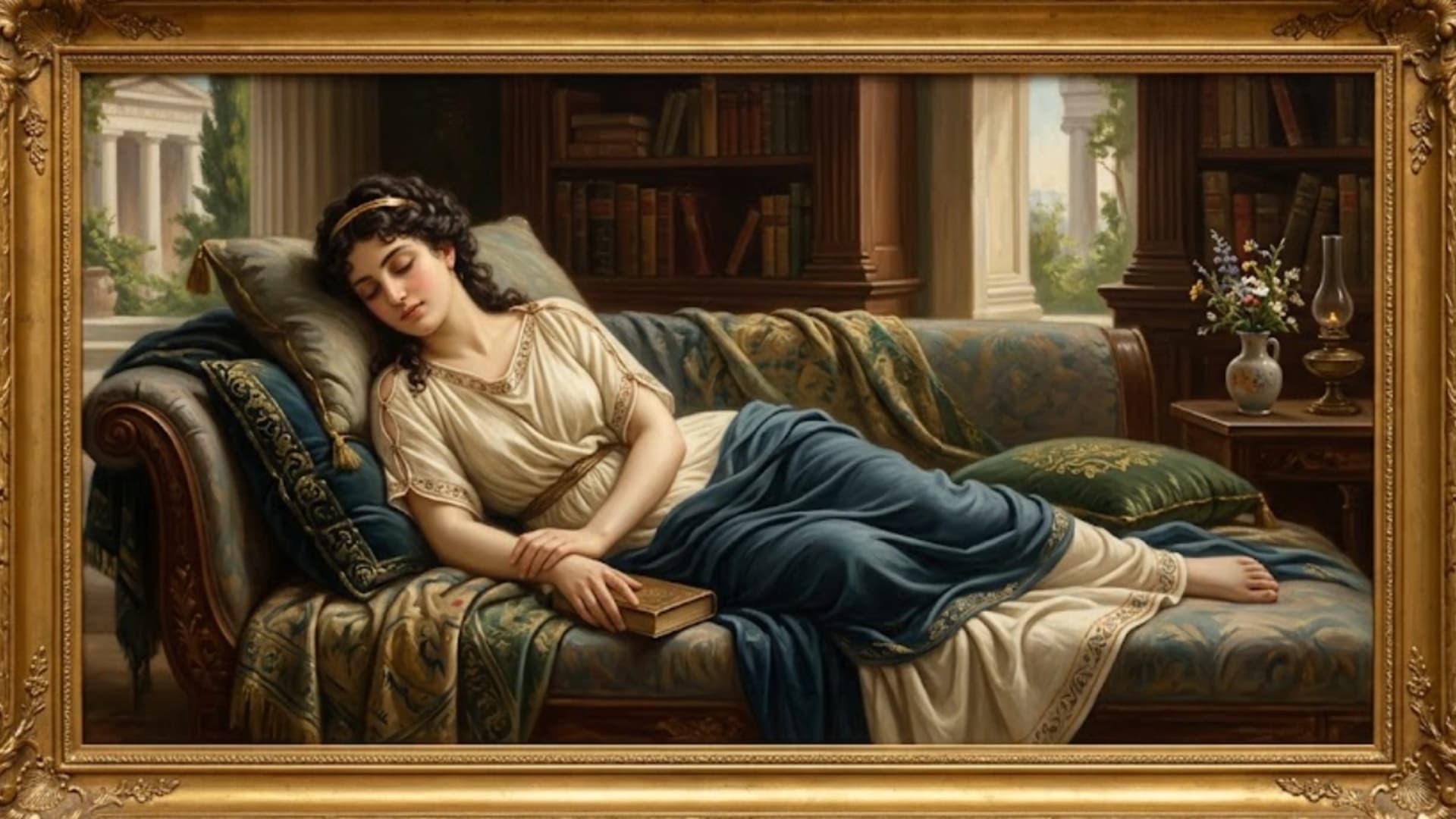
There was a time when independence wasn’t an insult. In ancient Egypt, cats were revered—guardians of the home, symbols of protection and grace, treated with a kind of quiet reverence. They were not owned so much as honored. And perhaps that is where the unease began. Because anything that cannot be owned cannot be controlled.
Fast-forward a few thousand years, and the story shifts. The language changes. Women are told to be charming, accommodating, manageable. And anything that resists those expectations—anything that refuses to bend—is marked as strange, excessive, or undesirable. The same independence once celebrated becomes something to question.
And yet, women who love cats have always been the ones who refuse to comply. We draw boundaries. We choose affection on our terms. We stir the pot.
There’s a reason the patriarchy has feared women with cats. Both are unpredictable, self-assured, and unwilling to sacrifice their dignity for anyone else. Both can be quiet in the presence of power yet impossible to ignore. Both demand respect, even when it’s inconvenient. There’s no neatness in a cat’s path, no predictability in a woman who knows herself. And that unpredictability—this refusal to fit into a box—is precisely what has always unsettled systems that rely on control.
Being a “cat lady” is an act of quiet rebellion. It’s a statement: I am not yours to shape. I am complete without needing your validation. I am capable of love, joy, and chaos, on my own terms. I am a steward of my own life, as a cat is the master of its own space.
Call it defiance if you like. But history has a way of repeating itself in whispers. What was once revered becomes ridiculed. What was once sacred becomes suspect. And the woman who walks her own path—who keeps her own company and answers only to herself—has always been the one most likely to be misunderstood.
So go ahead—call me a cat lady. I’ll take it as a compliment. Because like the cats who curl themselves into our laps only when they choose, women who live like this are not needy, not timid, not small. We are alive. We are powerful. We are untamable.
And that, my friends, is something worth remembering.
Cats have always had a way of choosing their people.
Not the loudest in the room, not the most admired—but the ones who stand slightly apart. The outcasts. The ones others don’t quite understand. The quiet observer. The so-called “too much” or “not enough.” The wise woman at the edge of the village. The child with a broken heart. The ones who live closer to feeling than to performance.
There is something in cats that recognizes those people—and stays.
I know my own cat, Honey, a Russian Blue mix, has brought me more comfort than any self-help book ever could. There is a kind of presence there that asks for nothing, yet offers everything. And when she curls beside me, purring, there is something almost sacred in it—something steady, grounding. A quiet reminder that healing doesn’t always arrive in words. Sometimes it arrives in warmth, in rhythm, in simply being held.
And those purrs are not just symbolic. Scientifically, a cat’s purr vibrates at frequencies that can support healing—helping with bone density, easing tension, regulating stress. In a sense, when she curls into me, she is practicing her own kind of restoration. And somehow, in that same moment, I am restored too.
Which leads to an uncomfortable question: if something so gentle, so healing, so mutually sustaining has been met with suspicion or dismissal—what does that say about the world that labelled it that way?
History has not always been kind to cats, or to the women who are drawn to them. When independence doesn’t fit neatly into the roles society prefers—when a woman chooses solitude over performance, self-possession over approval—it becomes easier to rename that choice as something lesser. Something eccentric. Something to be questioned.
But that reframing says more about the observer than the observed.
Because neither cats nor the women who love them were ever lacking. They were simply not designed to be easily owned, easily directed, or easily understood. And for some, that has always been difficult to accept.
“You’ll be alone,” I’ve seen online. “Alone with your cats.”
Oh no. The horror.
My wine. My jazz. A good novel. A soft, warm creature who doesn’t weaponize incompetence as a personality trait. Say it isn’t so.
But beneath the humor, there’s a quieter question: why is that meant to be threatening at all?
Because somewhere along the way, solitude was rebranded as failure. As if a life must be measured by who witnesses it, who approves of it, who shares it. As if being alone is the same as being without.
And yet, there are people who have chosen something different—not by accident, not by default, but by design.
Take Enya. She lives in a castle, surrounded by quiet, accompanied by her cats, shaping a life that exists entirely on her own terms. Unmarried. Unhurried. Unapologetic.
And somehow, in that stillness, she becomes larger—not smaller. More mysterious, more self-contained, more entirely herself.
If that is loneliness, it’s a version of it that doesn’t look like loss.
It looks like ownership of one’s own time. One’s own space. One’s own life.
It’s not new, either.
Words change shape over time. Spinster once simply referred to a woman who spun thread—someone independent, working, sustaining herself. But over time, the word gathered a different meaning. It became a shorthand for failure. A label used to imply that a woman who didn’t follow a prescribed path had somehow fallen short of it.
And that pattern repeats.
Why do we keep seeing this?
Because independence, especially in women, has never fit neatly into the structures that rely on their labor. Not just in one form, but in many. The work that is seen, and the work that isn’t. The visible contributions, and the quiet ones that hold everything else in place.
There has always been a need for women—as workers, as caretakers, as the backbone of homes and communities. But when a role becomes expected, it is often taken for granted. And when something is taken for granted, it is easily renamed. Reframed. Sometimes diminished.
So when a woman steps outside those expectations—when she chooses a different rhythm, a different kind of life—it can be read as a refusal, rather than a redefinition.
But perhaps it is neither.
Perhaps it is simply a different way of existing.
One that doesn’t rely on approval to be valid.
One that doesn’t need to be measured against someone else’s standard to have value.
Emotionally, too, cats seem to encourage a nervous system that prioritizes itself.
There is something quietly instructive about living alongside a creature that does not override its own needs for the sake of approval. I have learned so much from an eight-and-a-half-pound being. If she doesn’t like something, she doesn’t do it. If she doesn’t want to eat something, she simply doesn’t. There is no performance in her choices. No apology. No negotiation.
She is not here for my entertainment. She is not here to perform, or to prove anything.
She is simply… herself.
And in that, there is a kind of clarity that feels almost radical.
Because so much of human life asks us to override that instinct—to ignore discomfort, to accommodate, to adjust, to perform in ways that are rewarded but not always aligned with who we are.
But watching her, I am reminded that there is another way.
Not louder. Not more demanding.
Just quieter. More certain.
So of course, a system that prizes roles and subservience would find something like a cat unsettling.
A cat does not negotiate its autonomy. It does not respond well to coercion, and it does not trade its behavior for approval. If you threaten it, it does not reshape itself to fit your expectations—it simply leaves, or ignores you entirely.
There’s something quietly radical in that.
Not defiance for its own sake, but a kind of grounded self-possession. A refusal to perform outside of its nature.
And perhaps that’s part of the discomfort.
Because anything—animal or human—that cannot be easily directed, easily rewarded, or easily controlled sits outside the structure of systems that depend on predictability.
Cats don’t conform to a script. They don’t ask to be owned in the same way. They form bonds, yes—but on their own terms, and only when it feels right to them.
And when you place that alongside how women have historically been expected to behave—expected to adapt, to soften, to accommodate—it becomes clearer why the comparison exists at all.
Not as a flaw.
But as a mirror.
Maybe the real fear was never the cat.
Maybe it was the woman who learns to listen to herself the same way—who recognises her own needs, trusts her own rhythm, and chooses her own company without apology.
Because once you understand that, once you realise you can belong to yourself first and still give and receive love freely, the rest begins to fall away.
The noise. The labels. The expectations.
What remains is something quieter, but far more solid.
A life that feels like your own.
And in the end, that is not loneliness.
That is freedom.