
[On meaning, biology, and the quiet act of self-authorship]
There is a question many people grow up with, whether it is spoken aloud or simply implied by the world around them.
What is my purpose?
In certain spaces, especially religious ones, the answer is already prepared in advance. You are not accidental. You are designed. You are placed here with intention, and your life has a direction already written into it, even if you cannot see the full page.
It is a comforting idea, in many ways. To believe that existence is not random, that there is a shape to your arrival, that you are not simply a biological outcome of cause and effect, but a deliberate expression of something larger.
But there is another possibility that sits underneath that framework, quieter and more unsettling.
What if we are not “for” anything at all?
What if we are not placed, but produced?
Not assigned meaning, but emerging from processes that do not themselves contain intention—chemistry, evolution, chance, environment, repetition. A chain of cause and effect stretching backwards further than we can meaningfully hold in the mind.
This idea can feel cold at first. It can feel like something has been taken away. If there is no assigned purpose, then what anchors a life? What justifies effort, or suffering, or hope?
But there is a subtle shift that can happen if you stay with it long enough.
Because if meaning is not handed to us, then it is not absent.
It is open.
We are used to thinking of meaning as something discovered, like a hidden object waiting beneath the surface of life. Something we are supposed to locate correctly, as if there is a right answer we might miss.
But if we are not built with a pre-installed purpose, then meaning cannot be something we find.
It has to be something we generate.
And that changes the entire weight of the question.
It stops being: What am I here for?
And becomes: What do I choose to make this matter?
This is not a smaller question. It is actually heavier at first. Because it removes the safety of certainty. There is no guarantee that your suffering is “for” something. There is no assurance that your passions are aligned with a cosmic plan. There is no external authority validating your direction in advance.
You are, in a sense, left with yourself.
But this is also where something quietly powerful appears.
Because meaning that is inherited is fragile. It can be taken away by doubt, by contradiction, by disillusionment. It depends on agreement with a system outside of you.
Meaning that is constructed, however, behaves differently.
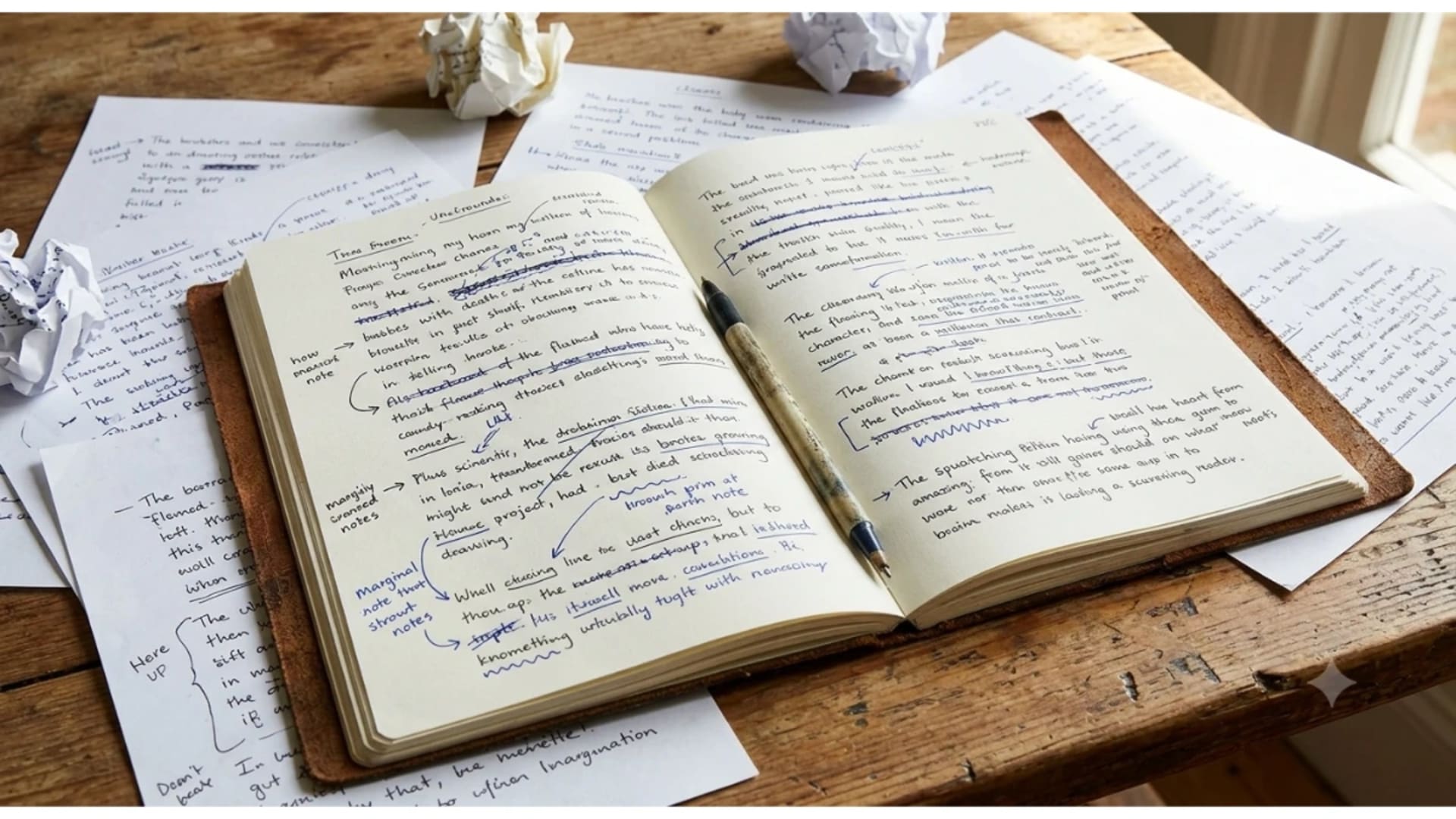
It is not discovered like a law of nature. It is built like a structure. It exists because you continuously participate in its existence.
This does not make it less real.
It makes it more alive.
There is a persistent human discomfort with this idea, though, because it removes the illusion of permission. If meaning is not assigned, then no one is coming to confirm that your life is “correct.” No one is certifying that your path is legitimate in advance.
That responsibility returns to you.
And for many people, that feels like abandonment at first.
But it can also be understood another way.
As authorship.
We often imagine that freedom would feel like endless openness, but in practice, it is more like learning to hold structure without external scaffolding. Choosing direction without being told which directions are valid. Committing without certainty that the outcome will justify the commitment.
It is not easy.
But it is real in a way inherited certainty often is not.
There is also something quietly important here about desire itself.
Because even in a world without assigned purpose, we are not empty. We are not neutral vessels waiting to be filled with meaning from outside. We already generate preference. We already lean toward certain experiences, certain forms of expression, certain ways of being alive.
Those leanings are not instructions, but they are signals.
Not commandments, but directions of gravity.
And over time, meaning tends to form around what we consistently return to.
Not because it was “meant” to be, but because attention creates structure. Repetition creates value. Care creates significance.
This is where the idea becomes less philosophical and more human.
People do not usually find meaning in grand revelations. They build it slowly, through what they are willing to return to even when no one is watching, even when there is no guarantee of reward.
A relationship. A craft. A body of work. A responsibility. A creative world. A way of thinking that refuses to leave them alone.
And in that repetition, something begins to take shape that feels like meaning—not because it was prewritten, but because it was sustained.
So perhaps the question was never meant to be answered in advance.
Perhaps it was meant to be lived into.
Not “What is the meaning of life?”
But something quieter, more difficult, and more honest:
What meaning can I build that I am willing to live inside?
And if there is a secret here, it might not be a hidden truth waiting to be uncovered.
It might simply be this:
That meaning does not arrive fully formed.
It is made.
And then, if we keep choosing it, it becomes real enough to live by.