
A colleague of mine that I met during my MA studies dedicated his entire academic career to the study of Black history in the U.S. A brilliant writer and a talented researcher, he is currently pursuing a PhD in Spain and is focusing on the role Black Americans played in the Spanish civil war. Dario is, quite literally, a walking encyclopaedia of knowledge on the subject, so when he told me that learning of the Brotherhood of Sleeping Car Porters had the same effect on him as learning about the Challenger disaster had on me, I knew I had to dedicate an entire article to such an important, but oftentimes overlooked part of American history.

To understand how it even came about, we need to go back to the early 1920s. The Pullman Company, manufacturer of railroad cars in the mid-to-late 19th century and the first half of the 20th century, was one of the largest employers of Black people.[1] The company presented itself in a very posh way, promising financial support for black churches, newspapers and other organisations. The reality, however, was completely different. Although it did allow for many Black employees the benefits of a middle-income lifestyle and importance within their communities, the working conditions were rough at best.
Besides being depersonalised by passengers who referred to the porters as “George” to “honour” the founder of the company, George Pullman, the company required the porters to travel close to 18,000 km (11,000 miles), work for over four hundred hours a month and be satisfied with earning 27.8 cents (around $5 today) per hour of work to earn a basic monthly wage.[2] Besides not being compensated for “preparatory” and “terminal” duties, i.e. preparing the cars in the morning and cleaning them up in the evening, the porters also had to finance their food and uniforms, and could never earn a promotion considering the position of conductor was strictly reserved for whites.[3]

The logic of the company went as following: “Black people were trained as a race by years of personal service in various capacities, and by nature adapted faithfully to perform their duties under circumstances which necessitate unfailing good nature, solicitude, and faithfulness.”[4] Although the porters tried organising unions throughout the 1910s, their efforts were always suppressed by the company. It wasn’t until August 25, 1925, that the Brotherhood of Sleeping Car Porters was established in NYC, led by A. Philip Randolph, one of the leaders of the Civil Rights Movementlater on. The union motto, “Fight or Be Slaves”, was a poignant reminder of the gravity of their cause.
It goes without saying that the American Federation of Labor (AFL) was incredibly discriminatory at the time. Every attempt of Black workers to organise a union and have it legitimised by the AFL failed. However, Randolph and the Brotherhood’s co-founder and First Vice President Milton Price Webster were forces to be reckoned with. The Brotherhood soon attracted Pullman’s three largest terminals: Oakland, St. Louis and Chicago, Webster’s home base. Thanks to Webster’s influence in the city, the Chicago division of the Brotherhood soon became one of the most important ones.[5]

The Pullman Company immediately denounced the Brotherhood, and this game of cat and mouse would continue for the next twelve years. In an attempt to involve the federal government, the Brotherhood filed a complaint with the Interstate Commerce Commission calling for an investigation into Pullman rates, porter wages, tipping customs, and working conditions in 1927; the Commission claimed it didn’t have jurisdiction. In June of that same year, the Railway Labor Act mediation board recognised the union as representing a majority of Pullman porters.[6] This was the first step towards recognition from Pullman.
By 1934, the future of the Brotherhood was highly questionable. Besides pulling out from a strike against Pullman that likely would’ve been the end of the entire union, the organisation member rates were severely dropping, and the effects of the Great Depression sure didn’t help. To save the Brotherhood from being outlawed by the Wagner-Connery act that made company unions and covered porters illegal in 1934, Randolph and Webster mediated with the National Mediation Board (NMB), responsible for coordinating labor-management relations within the American railroad and airline industries. On June 1, 1935, they became certified by said board.[7]

Although the Brotherhood won a charter from the AFL that same year, it was only in August 1937 that the Pullman Company finally recognised the union. The contract signed included better wages for porters and maids, a 240-hour work-month and the promise that the company would take care of the porters’ food and uniforms after they’d been employed for ten years.[8] Things were finally moving in the right direction.
But the legacy of the Brotherhood doesn’t end there. As much as they’ve done to improve the working conditions of Black workers working for Pullman, the union basically trained an entire generation of civil right organisers. In reality, The Brotherhood of Sleeping Car Porters functioned as one of the first large-scale, nationally coordinated Black political organisations. Therefore, it’s no wonder that many “brothers” became key figures in the Civil Rights Movement.
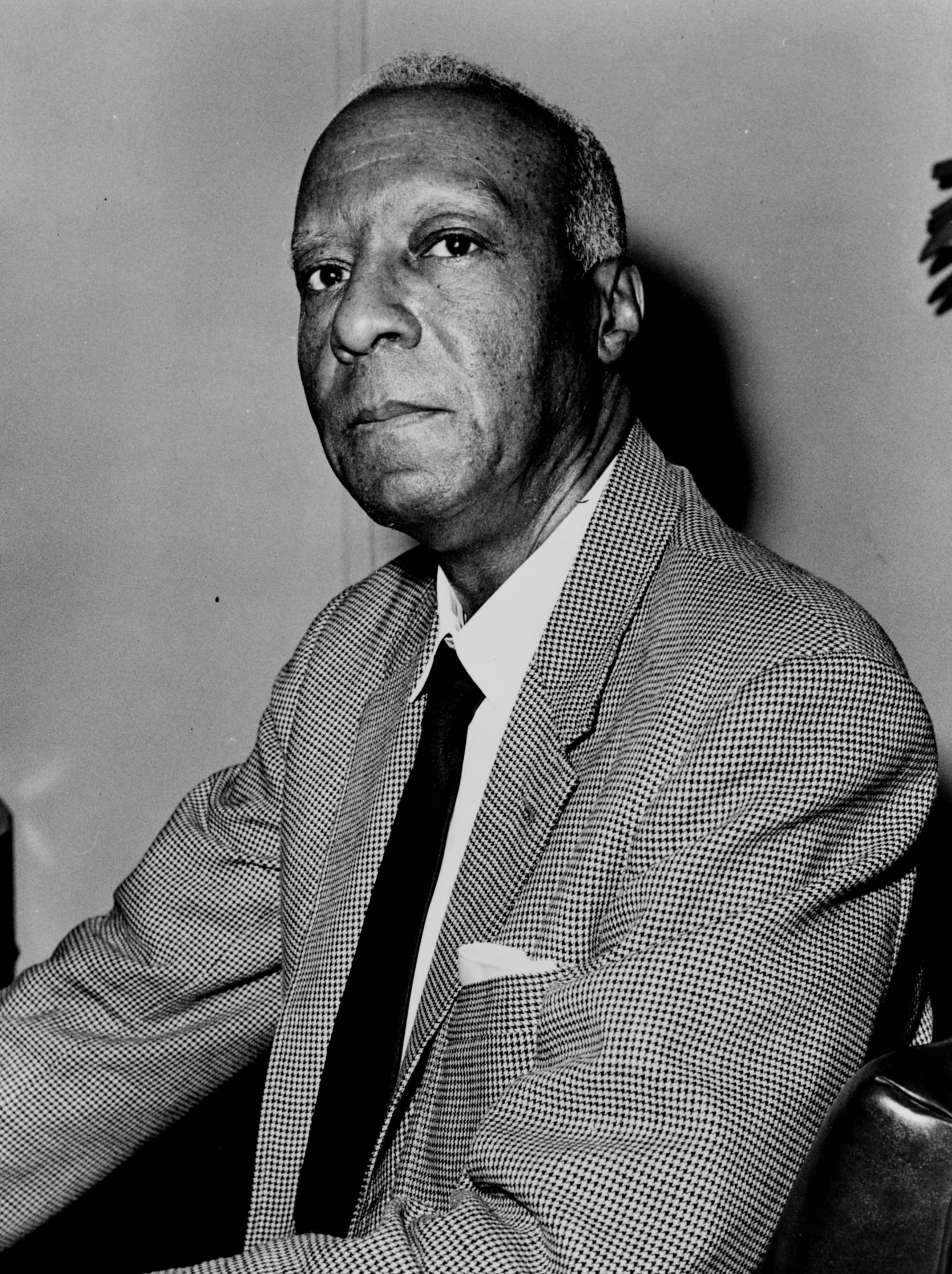
Randolph became the Movement’s leader following the assassination of Martin Luther King Jr., and E.D. Nixon, another prominent Brotherhood member, was one of the most relevant figures that fought for the rights of African Americans in Montgomery, AL. It’s the organised effort of the Pullman porters, AKA Brotherhood members, that contributed to the birth and development of the Black political consciousness. What might’ve been seen as a minor act of spreading the word, such as carrying newspapers, soon transformed into a national communication network that allowed for a large-scale effort to challenge deep-rooted racial inequality in a society that was in a desperate need of change.
The importance of an organisation determined to change the rights of Black workers extended beyond a national cause. In fact, in 1942, the union founded divisions in Montreal, Toronto and Winnipeg, only to later further expand to Calgary, Edmonton and Vancouver. The resilience, unwavering faith in their cause and the sheer determination this group of Black workers demonstrated was invigorating, rallying and inspiring to everyone desperate for a shift in the right direction.

For an organisation that has done as much as it has, it’s surprising that history tends to overlook it. I wonder whether it would be considered an obscure part of American history if the protagonists had been white. That’s the exact reason why stories like this have to be written and talked about. Black history is all around us, it always has been. As much as we love to believe equality has largely been reached, the fact that such a crucial part of contemporary American history remains marginalised is proof there’s still a long way to go. There’s no room for discrimination, hatred and bigotry. Our nationality, race and sexuality makes us unique, but never superior or inferior to others. I suppose that’s a lesson many are still yet to learn.