

Way before my Space Shuttle obsession started, back in high school, I went through a phase of being utterly fascinated by anything related to World War II. It turns out I wasn’t the only one since several of my friends later told me they were knee-deep in reading books, watching documentaries and looking for niche WWII facts they could share with their buddies. It wasn’t until I took a class called History of contemporary Japan during my BA studies that I finally found my niche WWII fact.
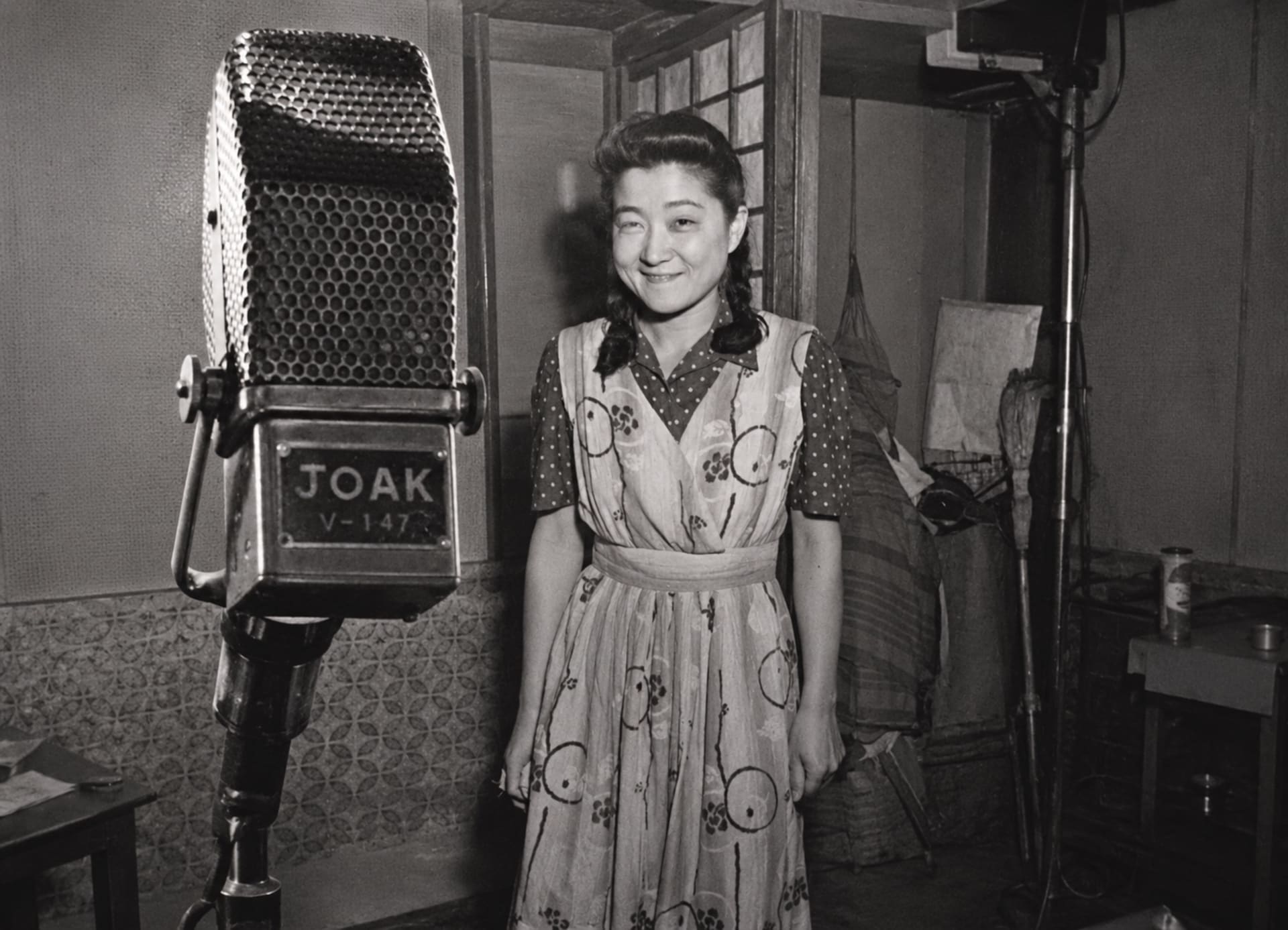
The story of Iva Toguri D’Aquino is a perfect example of what happens when wartime propaganda makes an enemy out of someone who had to do anything in order to survive. A woman who was forced to become a disc jokey and radio broadcaster to aid the Japanese in demoralising Allied forces became the face of treason in America. “Tokyo Rose” didn’t just become the best-known public myth of WWII, but a prime example of how a country can distort the truth to serve a specific purpose: in this case, the vilification and demonisation of a compatriot for her actions while she was a prisoner of war.
Born on the most patriotic of dates, i.e. on July 4, 1916, in Los Angeles, CA, Toguri was a daughter of Japanese immigrants. She was raised Christian, went to two different grammar schools, and eventually went on to graduate from the University of California, Los Angeles with a degree in zoology in 1940.[1] A day after her twenty-fifth birthday, Toguri sailed to Japan to visit a sick relative. Having traveled with only a Certificate of Identification as she didn’t have a passport, she requested one from the U.S. Consulate in early August to return home. Although the request was forwarded to the State Department, she was denied a passport following the attack on Pearl Harbor and was forced to stay in Japan indefinitely.[2]
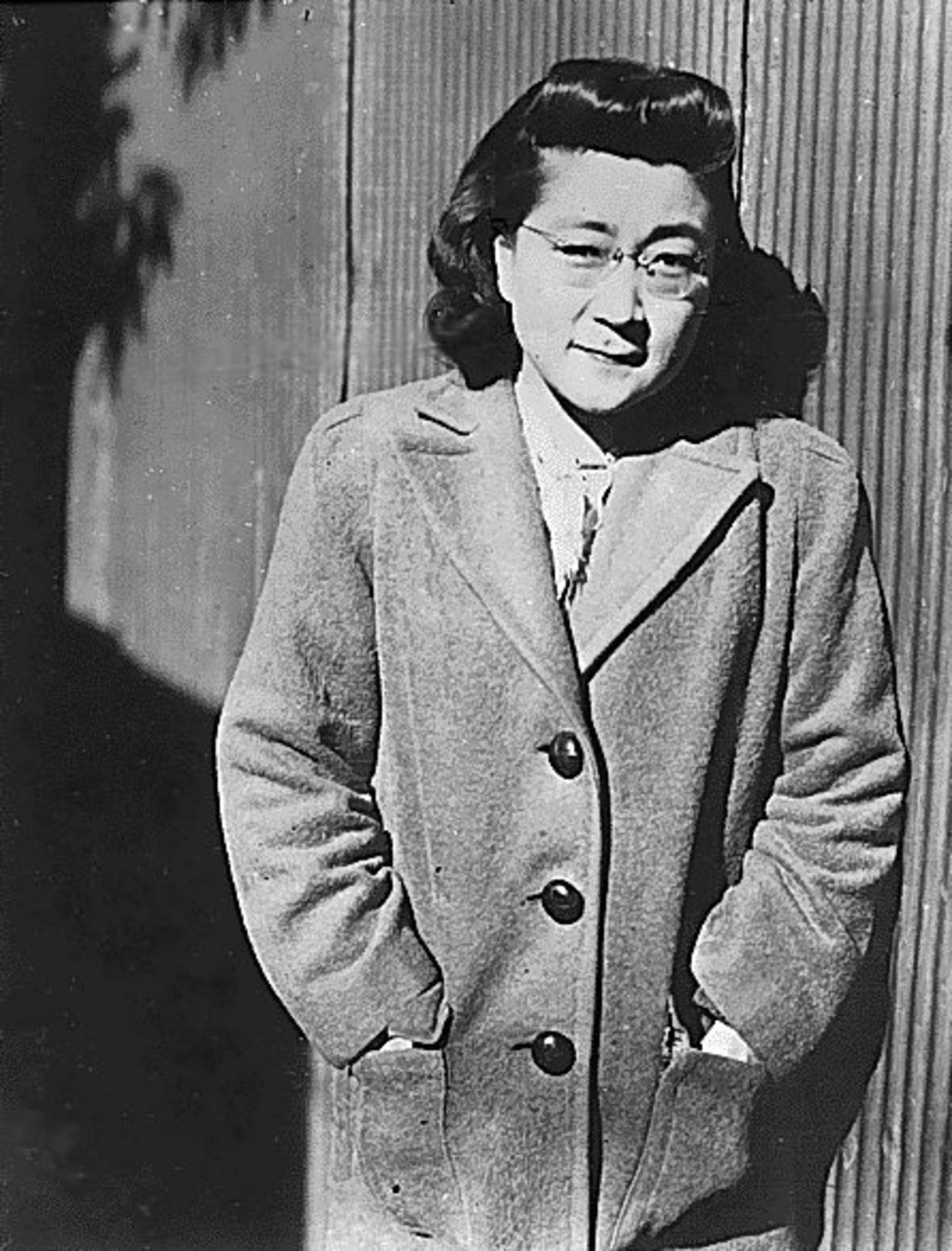
Like many other Americans in Japan during WWII, Toguri refused to renounce her American citizenship and was immediately named an “alien enemy” of the country. This, in turn, meant she didn’t receive a war ration card, so Toguri had to work odd jobs to survive. One of those odd jobs was working as a typist for Radio Tokyo - the very place that would turn her, and a number of other English-speaking broadcasters, into “Tokyo Roses.”[3]
The common misconception, later only strengthened by American propaganda, was that Toguri was the sole “Tokyo Rose.” The name, coined by U.S. newspapers, appeared for the first time in 1943 to refer to all English-speaking women that worked as broadcasters for Japanese radio shows that aimed to demoralise Allied troops by emphasising the losses and difficulties of war.[4] In fact, Toguri became one of the hosts of The Zero Hour radio show on Radio Tokyo in November 1943 when the Japanese government began forcing all Allied prisoners of war to broadcast propaganda.[5]

Although the U.S. government declared her a traitor, Toguri never actually broadcast any anti-American propaganda in her 340 broadcasts. Her close friendship with the producer and two assistants, all prisoners of war from different countries whom she smuggled food to while they were in a POW camp, meant that none of them would ever write anything anti-American for Toguri to broadcast.[6] Iva used the stage names “Ann”, for “Announcer”, and later “Orphan Annie”, a reference to the comic strip character Little Orphan Annie.[7] Toguri never used the name “Tokyo Rose.” Instead, this name was forced onto her by American media.
Her broadcasts were special as she’d often use American slang and play American music in an attempt to subtly motivate Americans listening to her broadcasts. In fact, she’d address Americans as “my fellow orphans” to ensure the American listeners were aware whose side she was really on.[8] Despite her best efforts, Toguri was arrested in Japan by U.S. authorities following the end of the war and was detained in a Japanese prison for three weeks. Even though she pleaded to be transported to the U.S. to give birth to her child, her request was denied and she gave birth in Japan, only to have her child die a few days later.[9]

Four years after she went for, what was supposed to be, a short visit, Toguri was back in the U.S. This time, in chains. Iva was put on trial by federal prosecutors for the crime of treason. What did she supposedly do to warrant such a conviction, you might ask? Well, according to the U.S. government, Toguri “adhered to, gave aid and comfort to the Imperial Government of Japan during World War II.”[10] Over two months after the most expensive and longest U.S. trial at the time began, Toguri was officially charged with one count of treason, received a ten-year prison sentence and was stripped of her citizenship.[11] Iva would eventually serve six years before her release in late January of 1956. Toguri was officially pardoned by President Ford in 1977.
Iva’s story is insanely fascinating because we get to see how governments tend to look for a needle in a haystack to support a preferred narrative. In this case, although the FBI and Douglas MacArthur’s staff found no evidence that Toguri’s actions in any shape or form aided Japanese Axis forces or hurt American morale, Iva’s role was, despite her status as a POW, considered a prime example of treason. Even though her broadcasts were focused on lifting the spirits of Americans in battle and at home, the fact she was part of a group of English-speaking women forced to spread Japanese propaganda was enough for the U.S. government to declare her public enemy no.1.

An ordinary woman who found herself stuck in an enemy country during the deadliest war in history became one of the most enduring public myths of WWII. Despite having been given a, technically, false pseudonym that made her infamous, Toguri remains a prime example of going through hell and still coming out on the other side as an icon. In fact, in 2006, the World War II Veterans Committee awarded its annual Edward J. Herlihy Citizenship Award to Iva, citing “her indomitable spirit, love of country, and the example of courage she has given her fellow Americans.”[12]
In a life-or-death situation she found herself in, Iva didn’t only refuse to renounce her U.S. citizenship, but she put her life on the line every time she openly addressed American listeners and played their music. She was, in her own way, on the battlefront, fighting for her country and refusing to let the enemy win in any way. For a woman that brave to be declared a traitor is, in itself, an act of treason. Toguri embodied the true meaning of patriotism: courage, fearlessness and a willingness to put herself in harm’s way to protect her country in the best way she could. If that doesn’t show love for one’s country, I truly don’t know what does.