

For many, the weeks leading up to the anniversary of September 11 are spent going back to watch the harrowing footage from the day, reading more on the events themselves or diving deep into the plethora of theories that have developed in the past twenty-four years. As a historian with a special interest in the events of 9/11 and the ensuing War on Terror, every day of the year is spent in research; whether it’s reading a yet unread book or analysing newly released footage from that day, the research into the day that changed the course of history doesn’t stop.
With a significant amount of official documents declassified in recent years, the general public is set to gain an even better understanding of the events leading up to September 11 and of those on the day of terror itself. Many of those already unclassified have only contributed to the inevitable spread of 9/11 conspiracy theories in the last two decades. Join me today to learn more about the two documents that further stirred up the conspiratorial belief that the U.S. government was behind 9/11.
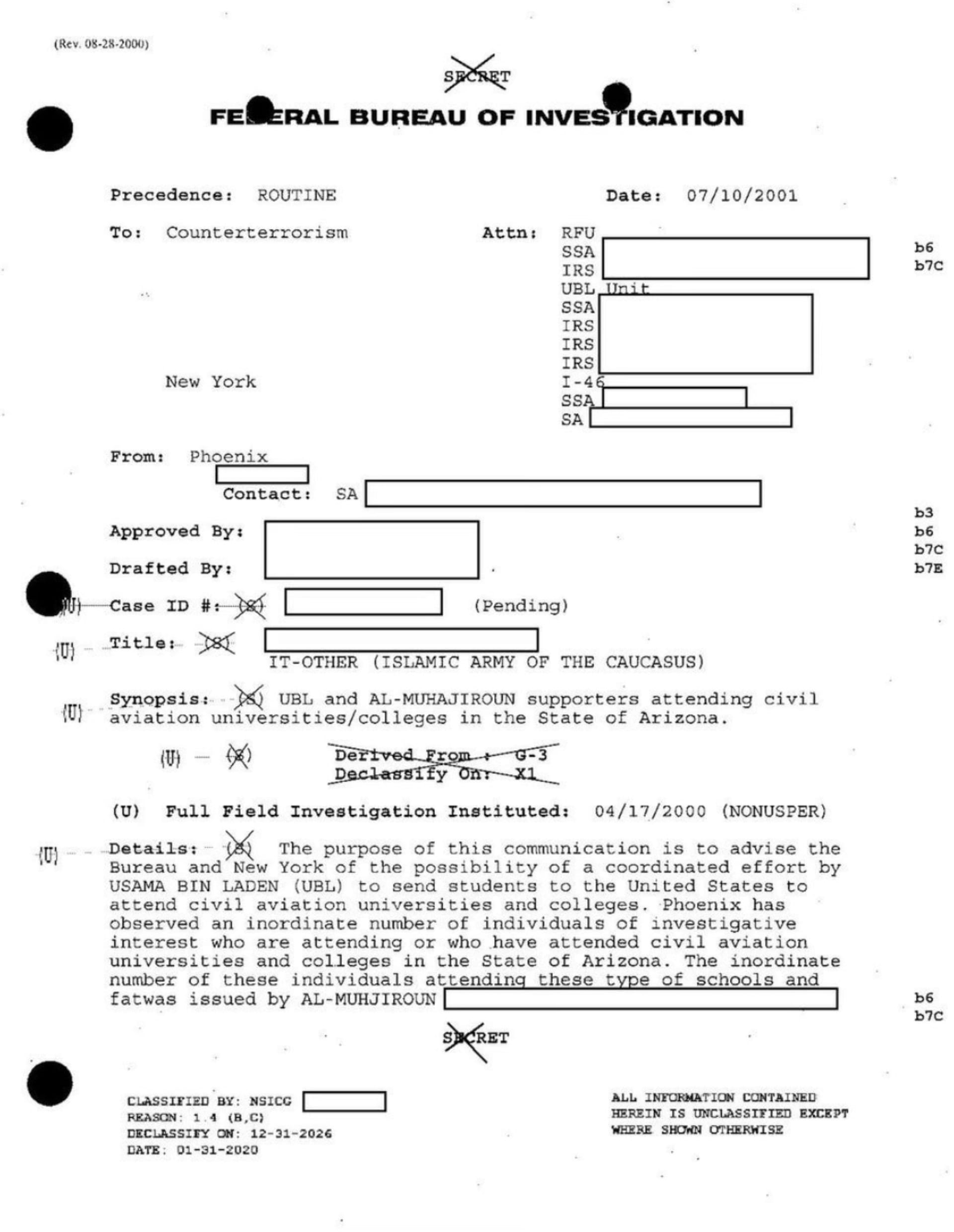
On July 10, 2001, sixty-three days prior to September 11, Special FBI Agent Kenneth Williams sent a letter to the FBI headquarters. The “Phoenix Memo,” as it’s called, suggested assembling a list of civil aviation schools worldwide to investigate students in some of the schools to trace their potential involvement with terrorist groups. According to Williams who was stationed in Phoenix, AZ at the time, there were a number of suspicious individuals who were either attending or have attended civil aviation schools in Phoenix. Williams writes in the memo: “The inordinate number of these individuals attending these type of schools and fatwas issued by Al-Muhjiroun, spiritual leader Sheik Omar Bakri Mohammed Fostok, an ardent supporter of Osama Bin Laden, gives reason to believe that a coordinated effort is underway to establish a cadre of individuals who will one day be working in the civil aviation community around the world.”[1]
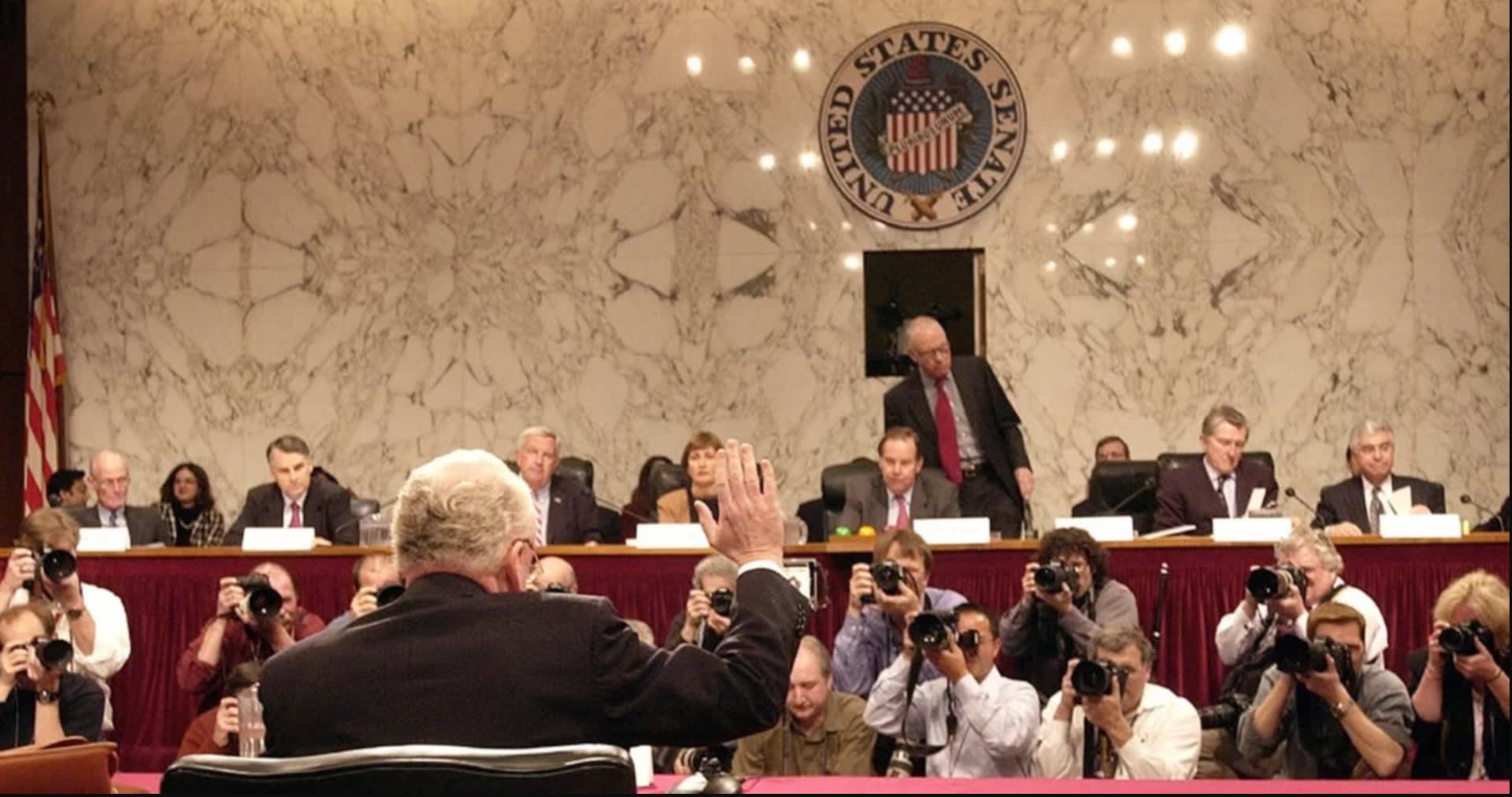
Although a serious matter, Williams’ letter was sidelined and ignored by a large portion of the FBI. In fact, although at least a dozen FBI officials saw the memo and understood the concern, the letter was never forwarded to the CIA or to President Bush who became aware of its existence only in May 2002. During a hearing by the U.S. Congress in May of that same year, Robert Mueller, the sixth director of the FBI between 2001 and 2013, said that the FBI’s lack of reaction to Williams’ memo was due to a “deficit in the agency’s analytical capabilities.”[2]

Just twenty-seven days after Williams’ memo, on August 6, 2001, the CIA prepared a document for the President’s Daily Brief (PDB). Titled “Bin Laden Determined to Strike in U.S.”, the document reported that both the U.S. and foreign governments had strong suspicions that Bin Laden was planning a large-scale terrorist attack on American soil. According to the document, in television interviews from 1997 and 1998, Bin Laden promised that his followers would “follow the example of World Trade Center bomber Ramzi Yousef and ‘bring the fighting to America’.”[3]
The CIA issued multiple reports throughout 2001 that warned of Bin Laden and al-Qaeda’s potential threat on U.S. soil. Senior members of the CIA, including Vice President Dick Cheney and Bush’s Secretary of Defence Donald Rumsfeld, questioned the viability of the claims being made. According to Michael Morell, a former intelligence analyst and author of the book The Great War of Our Time: The CIA's Fight Against Terrorism - from al Qa'ida to ISIS, the DoD considered the reports to be a deception technique used by al-Qaeda to incentivise the U.S. government to expend resources in response needlessly.[4]

Although the content of most PDBs wasn’t kept secret, this particular PDB’s content was, and it was only declassified in April 2004 for the purposes of the 9/11 Commission which included the document in the 9/11 Commission Report. According to the National Security Archive, President Bush was the first sitting president to release a PDB to the public.
Due to a poor relationship and abysmal communication between the CIA and the FBI in the years leading up to September 11, it’s easy to understand why someone would take an alternative route in order to explain discrepancies in the official narrative surrounding the event. The two intelligence agencies had a cold, adversarial relationship which limited effective counterterrorism coordination leading up to the attacks. Considering the CIA was mainly focused on foreign intelligence and overseas operations, and the FBI is a domestic law enforcement agency, the two often clashed over whether terrorism should be treated as a military/espionage problem (CIA) or a law enforcement/criminal problem (FBI).
Although certain terrorist plots have been foiled prior to 9/11 - the best known being the Bojinka plot, planed by Khalid Sheik Mohammad and Ramzi Yousef which intended to detonate bombs on eleven airplanes en route from Asia to the United States - al-Qaeda was determined to strike and they would have, regardless of the U.S. intelligence agencies’ attempts to stop them. This lack in communication between the two agencies aided the terrorist efforts. The ongoing competition made their priorities shift, and the overall lack of urgency present within the agencies and the presidential administration was enough to allow for the biggest terrorist attack on U.S. soil to take place.
Whether you believe it was George Bush and Dick Cheney that ordered the attacks to take place or not is not as important. The important part is that 2,977 people lost their lives in a matter of hours, and in the past twenty-four years over 3,000 people died due to 9/11-related illnesses. This is a defeating statistic for any American and non-American patriot. The mistakes made prior to the September 11 attacks were learned from in a hard way, and here’s to hoping that nothing even remotely similar ever takes place again.
Footnotes
Morell 2015, p. 41.
↩


